The gap nobody is filling.
First Amendment auditing works. An auditor walks into a public space, films what they see, and when a government employee violates their constitutional rights on camera — blocks the lens, demands ID without legal basis, retaliates for recording — the evidence is unambiguous. Civil rights claims settle. Departments pay. Officers face consequences they'd otherwise avoid entirely.
The mechanism is real. The problem is capital. Between the violation and the settlement check, auditors need to survive. Equipment. Travel. Living expenses. Legal fees. Most settlements take 12 to 24 months. Most auditors aren't independently wealthy. Most stop before they build a track record.
Believe in the mission. Have careers, families, lives. Won't do it themselves.
Have the time, the knowledge, the constitution. Don't have the capital to sustain themselves between violations and settlements.
Know exactly what cases are worth funding. Barred from soliciting or bankrolling litigation under champerty and barratry rules. Can't build this themselves.
Nonprofit. Slow. Selective. Politically constrained. Not built for this volume of work.
The gap is structural. It won't fill itself. Every month it stays open is another disciplined auditor who stops — not because the law didn't protect them, but because the bills didn't wait.

Performance-only funding. No settlement, no payment.
The model is not new. Litigation finance has operated legally in civil suits for years. What's new is the application — pointed specifically at First Amendment auditing, where the camera provides binary, unambiguous performance verification that standard litigation finance can't get elsewhere.
Identify qualified auditors
Auditors with demonstrated constitutional knowledge, professional conduct on camera, and a track record of clean, documented violations. Discipline and legal accuracy are the filter — not personality.
Advance operating capital
The funding entity covers living expenses, equipment, and travel between violations and settlement. The auditor can operate without needing to hold a day job that competes with the work.
Recover from settlement proceeds
When the case settles, the advance is recovered first. The funding entity takes a negotiated cut of the net proceeds. The auditor keeps the remainder.
No settlement = no payment to either party
The incentive structure handles quality control automatically. Auditors who escalate unnecessarily, don't know the law, or blow cases on technicalities don't produce settlements. They don't survive the filter. No vetting overhead required — the model selects for discipline over time.
Why the camera changes the math: Standard litigation finance deals with ambiguous outcomes — liability is contested, evidence is interpretive, juries are unpredictable. First Amendment auditing generates video evidence of the violation in real time. The camera is the performance verification mechanism. Either there's a clean, documented constitutional violation that settles, or there isn't.
The wealthy district angle — and why it matters beyond money
This model operates wherever constitutional violations occur. But wealthy districts are a deliberate and specific target — not because wealthy people are the enemy, but because that's where the collaboration between wealth and policing is most visible, most comfortable, and least challenged.
The same dynamic that produces a business owner calling an officer to remove a legally present auditor from a public sidewalk produces a private defense attorney for the wealthy defendant while the person without resources gets a public defender and a conviction. Same collaboration. Same power structure. Different venue. The auditor on that sidewalk makes the mechanism visible in the environment where it operates most freely.
Wealthy districts also produce a distinct legal vehicle beyond Section 1983. A private individual — not a government employee — who physically assaults an auditor on a public sidewalk for not stopping filming has no qualified immunity shield. They are a private defendant with deep pockets, a reputation to protect, and a strong financial incentive to settle quietly before discovery begins. The entitlement that makes this reaction predictable in these environments is the same entitlement that has never been told no at scale. The camera changes that.
We go where the problem lives and is most comfortable. That's not targeting wealth. That's accountability going where it hasn't reached yet.
The repeat officer strategy

When a specific officer produces a documented violation and faces no meaningful internal consequence — which is the standard outcome from internal affairs processes — their behavior is statistically unchanged. The model accounts for this deliberately.
Multiple funded auditors operating in the same jurisdiction means the same badge number can produce multiple settlements against different plaintiffs. The officer doesn't recognize the pattern. The municipality's legal department does. At the point where one badge number has generated enough settlements to become a visible budget line item, the department faces a binary: remove the officer, reassign them, or keep paying. The financial pressure makes the decision for them — not a complaint, not a moral argument, not a protest. The math.
A clean documented violation followed by a settlement is the goal. A settlement portfolio against the same badge number until the municipality's legal counsel makes that officer a budget problem is the mechanism. Both are the same model operating at different time horizons.
Deterrence is also a win
Not every deployment produces a violation. Some officers recognize what they're looking at — a legally present, constitutionally informed auditor with documentation running — and make the correct professional decision to leave them alone. No arrest. No detention. No case.
This is not a failed deployment. This is the model working as designed. The accountability pressure produced the correct outcome without requiring litigation. An auditor who becomes known enough in a jurisdiction that officers consistently choose not to engage has demonstrated deterrence — proof that the financial pressure mechanism works before the settlement even becomes necessary.
When a funded auditor's face becomes an informal avoid signal inside a department, the model scales past that individual by deploying new faces. The deterrence proof becomes the founding case for the next auditor. Both outcomes — settlement and deterrence — advance the mission. Neither cancels the other.
Why funded auditors get better settlements than individual auditors
Every auditor who has ever settled for less than a case was worth did it for the same reason: they needed the money now. The low settlement offer exists because the municipality's legal department knows the auditor can't wait 18 months for a jury verdict. The number on the table is a function of the auditor's financial position — not the legal merit of the case.
A funded auditor's living expenses are covered through the gap. That changes the negotiation entirely. When a municipality offers $6,000 to resolve a case worth $60,000 at trial, the funded auditor can say no. The self-funded auditor can't. The ability to decline a low offer is the leverage. Capital is what creates it.
Municipalities settle to cap exposure and avoid jury verdicts. When plaintiffs prevail at trial, jury awards consistently exceed prior settlement offers — because juries watching video of a constitutional violation aren't operating on the municipality's timeline or budget. The settlement offer is the municipality buying certainty. A funded auditor who can wait removes the certainty discount entirely.
The real danger in hostile jurisdictions is not jury hostility. It's cases getting dismissed before a jury ever sees them — through qualified immunity rulings at summary judgment. Clean video evidence removes the factual disputes that make those dismissals possible. When the violation is on camera, there is nothing for a court to resolve in the defendant's favor. The camera is not just the documentation mechanism. It is the summary judgment defense.
Civil rights attorneys can invest. Here's how.

The most obvious people to fund this model are the people who identified the gap — civil rights attorneys who see strong cases walk out the door because the auditor couldn't sustain themselves long enough to file. Bar association rules prevent attorneys from soliciting or bankrolling litigation. But they don't prevent passive investment in a funding entity that operates independently.
The clean structure
A civil rights attorney invests passively in the funding entity as a capital partner taking returns like any investor — provided they meet a clean set of conditions.
They do not direct which cases get funded. They do not select or recruit auditors. They do not advise auditors on legal strategy. They remain completely hands off operationally.
Their motivation: mission alignment plus financial return. Their knowledge identified the gap. The entity fills it. They profit without crossing bar association ethical lines.
This eliminates the need for large startup capital from non-legal investors. The attorney brings the money. An operator brings the model, the operational structure, and the auditor pipeline. Both hold equity positions reflecting their contributions. The MVP is one attorney, one proven auditor, one clean settlement — enough to prove the model and attract the next round.
Section 1988 — what changes the contingency math
Under 42 U.S.C. Section 1988, a plaintiff who prevails in a Section 1983 civil rights case is entitled to have their attorney's fees paid by the defendant — separately from the settlement or verdict amount. The municipality doesn't just pay the auditor. They pay the attorney.
This matters for every attorney evaluating whether to take these cases on contingency. The question isn't only "what percentage of a small settlement do I recover?" It's "do I recover my fees from the defendant entirely if we win?" In a prevailing Section 1983 case, the answer is yes — and that fee recovery is separate from what the auditor receives.
An attorney who believes the case will prevail isn't just betting on a fraction of one settlement. They're betting on a separately recoverable fee award that the losing side pays. Section 1988 was written specifically to make civil rights cases economically viable for attorneys who believe in them. It still does that. Any contingency attorney evaluating this model should run the numbers with Section 1988 in the calculation, not without it.
The model funds itself. Part of it funds something harder.

The straightforward cases — clean documented violations on camera, cooperative jurisdictions, clear liability — attract contingency attorneys and settle predictably. The model is designed around these cases because they're fundable, verifiable, and financially sustainable.
But the civil rights landscape is full of cases that are genuinely righteous, legally complex, and financially unattractive. No camera evidence. Contested facts. Jurisdictions that fight everything. Plaintiffs without resources and without the documentation that makes a contingency attorney say yes. These cases don't get litigated. The violations they represent go unaddressed — not because they don't matter, but because the economics don't work.
Ten percent of all fund profits directed toward complex righteous cases
Every fund operating under this model commits 10% of net profits to financing civil rights cases that meet a standard of genuine merit but don't attract standard contingency representation. The easy cases fund the hard ones. The financially sustainable work subsidizes the work that needs to happen but won't without deliberate capital allocation.
This commitment is not optional or aspirational. It is a structural design requirement built into the model from the beginning — not a marketing position, not a PR response to criticism, but a deliberate choice about what this operation is for.
The advisory board structure
Determining which complex cases merit the 10% requires legal judgment. The fund's attorney capital partners — already invested in the operation, already mission-aligned — serve as an advisory board on case selection for this allocation. They review cases, advise on merit, and recommend where the capital goes.
This advisory role is strictly limited. Attorney capital partners advise on which complex cases receive the 10% allocation. They do not direct auditor operations. They do not select or recruit auditors. They do not advise auditors on legal strategy. The wall between their advisory function and the operational auditing side is documented and maintained.
Their legal knowledge, which identified the gap in the first place, is the qualification for this role. Their financial stake in the fund is the alignment mechanism. Both make them the correct people to steward the 10%.
The result: a self-funding civil rights operation where the straightforward cases make the whole model economically viable, and the tithe ensures the model's success doesn't come at the cost of abandoning the harder work that needs doing.
The idea is the contribution. Take it.
The business model here is not novel. Litigation finance exists. Subcontractor performance structures exist. What's novel is the application — pointed at First Amendment auditing as a funded, scalable, replicable operation that doesn't require political will, legislative action, or institutional cooperation to work.
"One entity executing this model is a business. One hundred entities executing this model across every major city simultaneously is an industry — and an industry is what actually moves municipal budgets to the point where police reform becomes a financial survival issue rather than a political preference."
The goal is not to own the model. The goal is to make it spread faster than any one person could scale it. This site exists to give the idea to every attorney, investor, and auditor who has felt the problem without having the framework. The people who need this are already looking for something exactly like it.
No company. No product. No pitch. No ownership claim. Just the idea — clearly articulated, legally grounded, free to use.
The lever is always financial. History is clear on this.
Moral arguments prime the culture. They matter. They build the public sentiment that makes legal and financial mechanisms politically survivable. But institutions do not change because someone made a compelling argument. Institutions change when the wrong behavior becomes more expensive than the right behavior.
| The issue | What moved it |
|---|---|
| Slavery | Ended fastest where it became economically unviable. Moral opposition existed for generations before that. |
| ADA compliance | A generation of litigation made non-compliance more expensive than building ramps. Conscience didn't move it. Cost did. |
| Big Tobacco | Decades of moral argument moved nothing. One generation of litigation bankrupted them into settlement. The lever was financial. |
| Seatbelts | The insurance industry pushed it because payouts were killing them. Safety wasn't the argument that moved policy. Money was. |
| Police reform | Currently stuck at the moral argument stage. The financial mechanism is missing. This model builds it. |
Most reform efforts ask the powerful to voluntarily constrain themselves out of conscience. The historical success rate of that approach at institutional scale is close to zero. This model doesn't ask for anything. It makes unconstitutional conduct systematically more expensive — across every jurisdiction where a funded auditor operates — until the cost-benefit math flips inside the municipalities themselves.
No cooperation required. No political will required. No conscience required.
How this grows from one case to an industry.
| Phase | What happens | What it proves |
|---|---|---|
| MVP | One attorney investor. One proven auditor. One clean settlement. | The model works. Capital cycles. The incentive structure selects for discipline. |
| Early | Tiered advance structure — small first case, larger advances as track record builds. Fund 3–5 auditors simultaneously. | Portfolio logic: fast settlements fund slow ones. Capital doesn't sit idle. |
| Growth | 10+ auditors across multiple jurisdictions. Each fund is independently operated — no central control required. | The model is copyable. One hundred versions of this, simultaneously, in every major city. |
| Industry | Municipal legal budgets face systematic pressure from an entire funding industry operating in parallel across jurisdictions. | Reform becomes a financial survival question. The political argument becomes irrelevant. |
What to say. When to say nothing. How to flip the script.
Most auditors lose ground in predictable encounters not because the law isn't on their side — it is — but because they defend when they should redirect, explain when they should stay silent, and engage on the other person's terms instead of their own. These tools are designed for the encounters that repeat themselves across every jurisdiction, every camera, every auditor. Learn them. The situations that require them will arrive on schedule.
The two questions that matter most in a law enforcement encounter
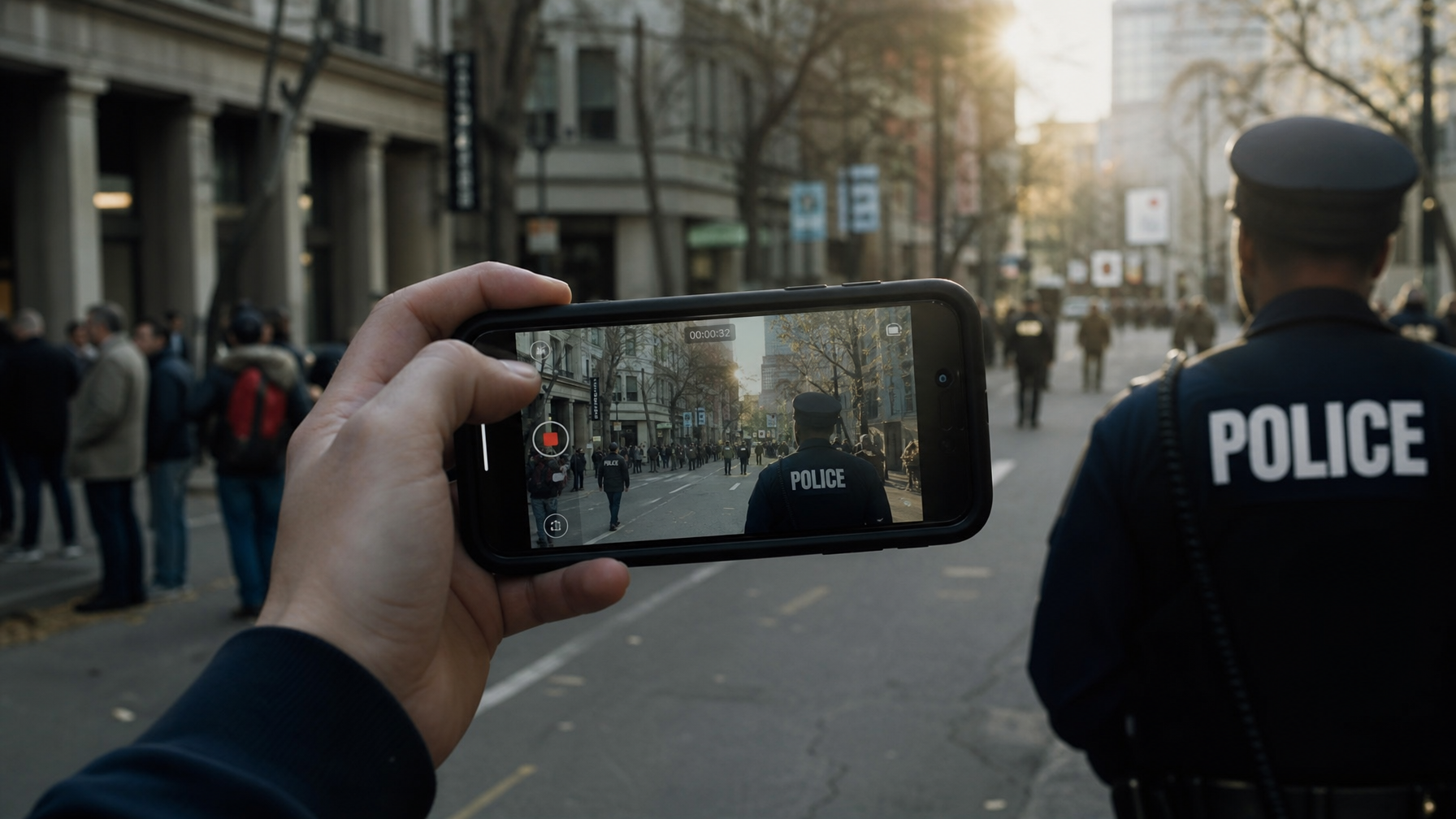
When an officer approaches, two questions force them to commit on camera before anything else happens. Ask them calmly, one at a time, and wait for the answer.
"Am I being detained?"
If yes — the detention is now documented, the clock starts, and every subsequent action by the officer is legally accountable from this moment. If no — you are free to go, and any subsequent restriction is the violation.
"Will I be arrested if I do not provide identification?"
If yes without lawful basis — that is a wrongful arrest documented before the cuffs come out. If no — the ID request had no enforcement mechanism. Either answer is useful. The officer has to choose one on camera.
These two questions are not arguments. They are procedural moves that force legal commitment before the situation escalates. Any auditor can memorize and deploy them regardless of composure level or legal background.
The silence protocol — primary strategy for every encounter
The most effective thing an auditor can do in a confrontational encounter is nothing. No explanation. No defense. No engagement. Stay present, stay legal, keep the camera running, and let the other person fill the silence.
Most people cannot tolerate silence under social pressure. They talk. What they say to fill that silence — justifications, threats, manufactured legal claims, admissions — is almost always more useful than anything an auditor could have drawn out through direct engagement. The camera collects it without prompting.
Silence is not passive. It is the most aggressive move available because it removes every script the other person prepared for. They came ready for an argument or a quick compliance. Give them neither.
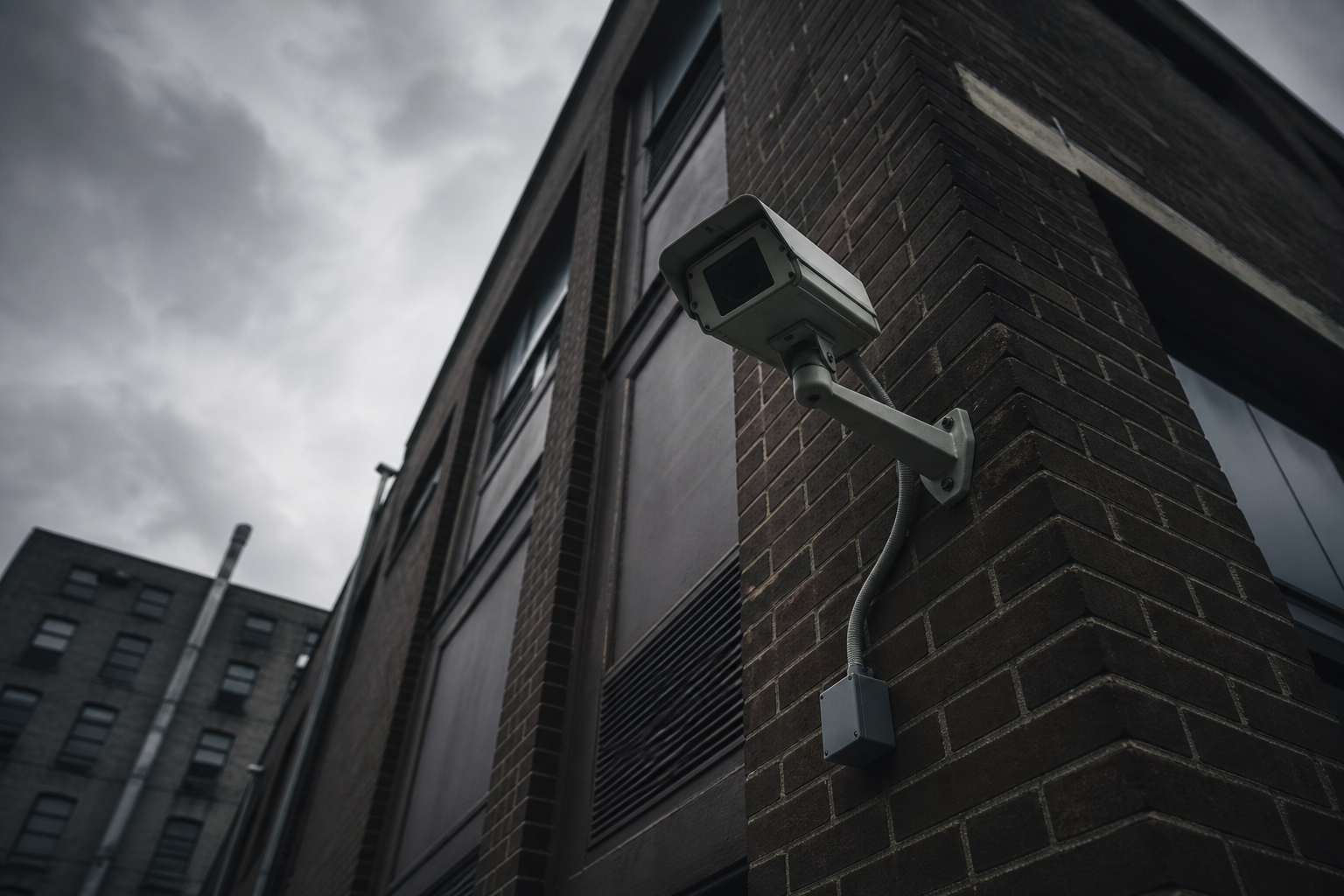
The security camera flip
Situation: You are filming from a public sidewalk. A business employee or owner approaches and tells you that customers are uncomfortable being filmed without their permission. They demand you stop.
Do not defend your right to film. Do not cite case law. Do not explain anything.
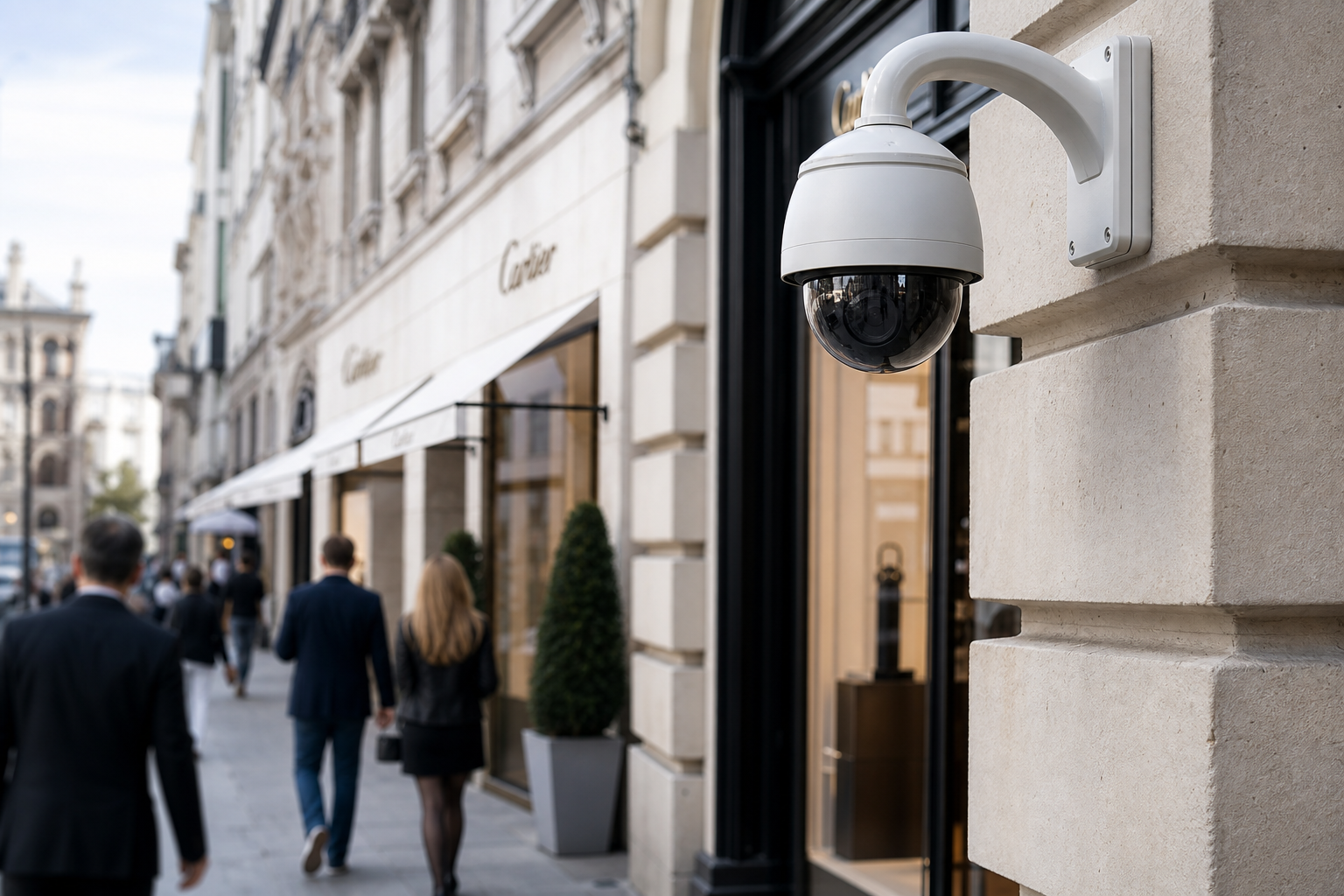
Point to the exterior security cameras on their building and ask: "That camera has been recording everyone who walks by here without their permission. Did you ask mine?"
The legal framework behind the question is identical in both directions. One party consent applies to both cameras equally. Their security camera recording a public sidewalk is subject to the exact same legal standard as your camera recording from that sidewalk. If theirs is legal — and it is — yours is legal by the same logic. The question forces them to explain why their recording is permissible and yours isn't. There is no answer that doesn't collapse their own argument on camera.
Want enforcement vs. law enforcement
Situation: An officer approaches and informs you that a business called because they want you removed from the area. The officer is acting on the business's preference, not on any legal basis for your removal.
Do not defend your presence. Do not explain where you're standing or why.
If you say anything at all, redirect with this: "I want them to lower their prices. Why is their want more important than my want when neither one of us is breaking the law?"
The officer arrived to enforce a business owner's preference. That is not law enforcement. It is want enforcement — and naming that dynamic out loud, calmly, on camera, exposes exactly what is happening in the interaction. The officer cannot answer the question without either acknowledging they have no legal basis to remove you or inventing one on camera. Either outcome serves you.
The preferred move is silence. But when silence isn't enough and something needs to be said, this is the line. Say it once. Stop there. Let the camera do the rest.
These tools will expand as documented encounters produce new repeating patterns. The standard for adding a tool to this section: it must work in a predictable situation, require no improvisation to deploy, and flip the frame without requiring the auditor to defend anything. Defense is the wrong register. Redirect is the move.
Three people need to find each other.
The model requires three participants. None of them are hard to find. They're already operating in the same ecosystem without a structure that connects them. This site is that structure.
You know the law. You document violations cleanly. You need capital to keep going.
If you have a track record of documented violations and professional, legally accurate conduct on camera, this model was built for you. The advance covers the gap between the violation and the settlement. Your discipline is the only qualification that matters.
You see strong cases walk out the door. You can't fund them yourself — but you can invest.
Passive investment in a funding entity — fully hands off, no case direction, no auditor recruitment — is the clean path. You get financial return on the mission you already believe in. Get a formal ethics opinion from bar counsel first. Do not skip that step.
You have capital and mission alignment. The return is financial and constitutional.
Every dollar of return came from a government entity that violated someone's constitutional rights on camera and got caught. The profit is the accountability mechanism. This is what clean money looks like.
This site has no intake form. No company behind it. No investor pitch. If you're an auditor, an attorney, or an investor who sees this clearly and wants to build it — the model is above. The legal framework is documented. The risks are named. Find the other people who see it. Build the MVP. Prove it once.
The idea does the rest.

Full transparency. No institution. No agenda.
How this started.
I watched a YouTube short about a motorcyclist getting tackled off his bike by two armed, armored officers over a missing tag. I went down the rabbit hole — qualified immunity, the reasonableness standard, why juries never see these cases. By the end of the conversation I was staring at a funding model that nobody had built and couldn't figure out why.
Turns out the people who understand the gap best are barred from filling it. Civil rights attorneys can't fund the auditors. Civil rights organizations are too slow and too selective. Investors with mission alignment don't know where to plug in. The auditors themselves are grinding on fumes between violations and settlements.
The model isn't complicated. The idea just needed to exist somewhere.
Who I am.
My name is Daniel Coleman. I'm the founder of Osiris Infrastructure — we build revenue and operational infrastructure for specialty businesses in Texas. Before that I built and sold Coleman Electric. I'm not a lawyer, not an activist, not an academic. I'm a builder who saw a structural gap and had the tools to do something about it.
Why Osiris Infrastructure is behind this.
We build the kind of infrastructure that lets small operations punch above their weight — websites, CRMs, automation, the systems that keep a business running when the owner needs to be doing the actual work. That's exactly what every fund that launches from this model is going to need. We're providing it free. You cover your own costs — domains, third-party services — but the platform doesn't cost you anything.
The money isn't the most important thing here. If a client doesn't want to work with a company that backs constitutional accountability, we didn't want them anyway.
The idea is free. So is the infrastructure to start.
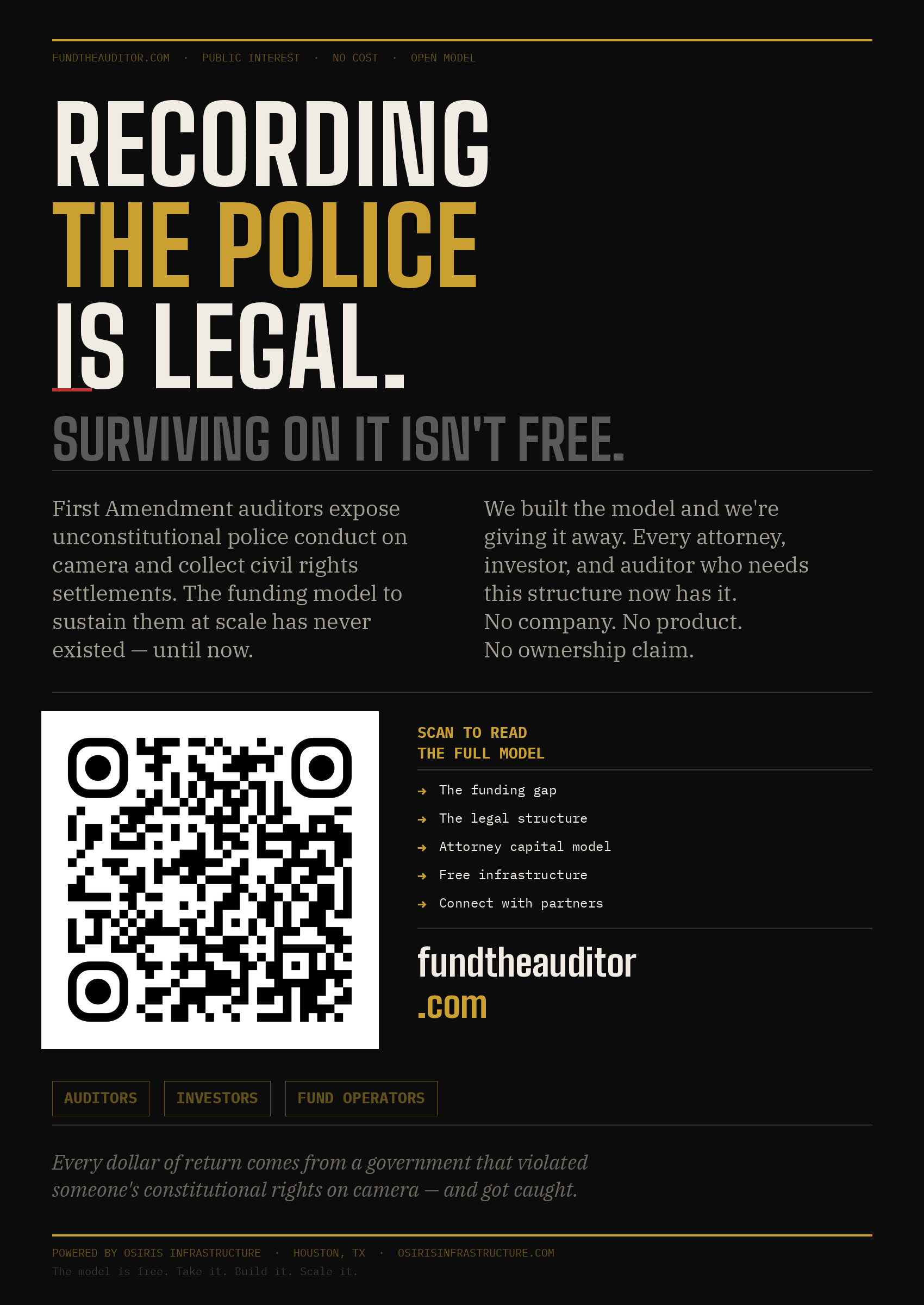
Hand this to everyone you meet.
Download the flyer, print it, and put it in people's hands. Every auditor video comment, every courthouse, every barbershop, every waiting room. The idea spreads person to person faster than any algorithm.
↓ Download FlyerA lot of people will read this who want to do the auditing. They have the demeanor. They know the law. They don't have connections, capital, or a place to start. This section is for them — and for the attorneys and investors who know they want in but don't know who to call.
Every fund that launches needs more than a model. It needs a website, a CRM, intake systems, a way to track cases and manage auditor relationships. Building that from scratch is a barrier that kills good ideas before they start. It shouldn't be.
Free platform access
If you're serious about building a fund, you get a sub-account on our GoHighLevel platform at no charge. You cover any rebilling costs — domains, third-party services — but the platform itself doesn't cost you the standard $99/month. Your fund needs infrastructure. We'll provide it.
A website for your fund
The more sites like fundtheauditor.com operating across the country, the faster this becomes an industry. Each fund needs its own presence — its own jurisdiction, its own auditor roster, its own attorney relationships. We'll help you build it. More sites means more pressure, more settlements, more reform.
Connection to the right people
An auditor without an investor is a great idea without capital. An investor without an auditor is capital without direction. If you submit your information below, we'll do what we can to connect you with the right counterpart — not as a placement service, but as people who want this to work.
This isn't a pitch. There's nothing to sell here. This is a genuine offer from someone who built the model, released it publicly, and wants to see it replicate faster than any one person could scale it alone. The time is available. The infrastructure exists. Use it.
Tell us who you are and where you want to fit in.
No commitment. No pitch. Just a way to find the right people for each other.